How Austria's Legal Framework Guides the Development of Responsible Gaming Tools for Digital Platforms
Yves Werner · Aug 19, 2026

How Austria's Legal Framework Guides the Development of Responsible Gaming Tools for Digital Platforms
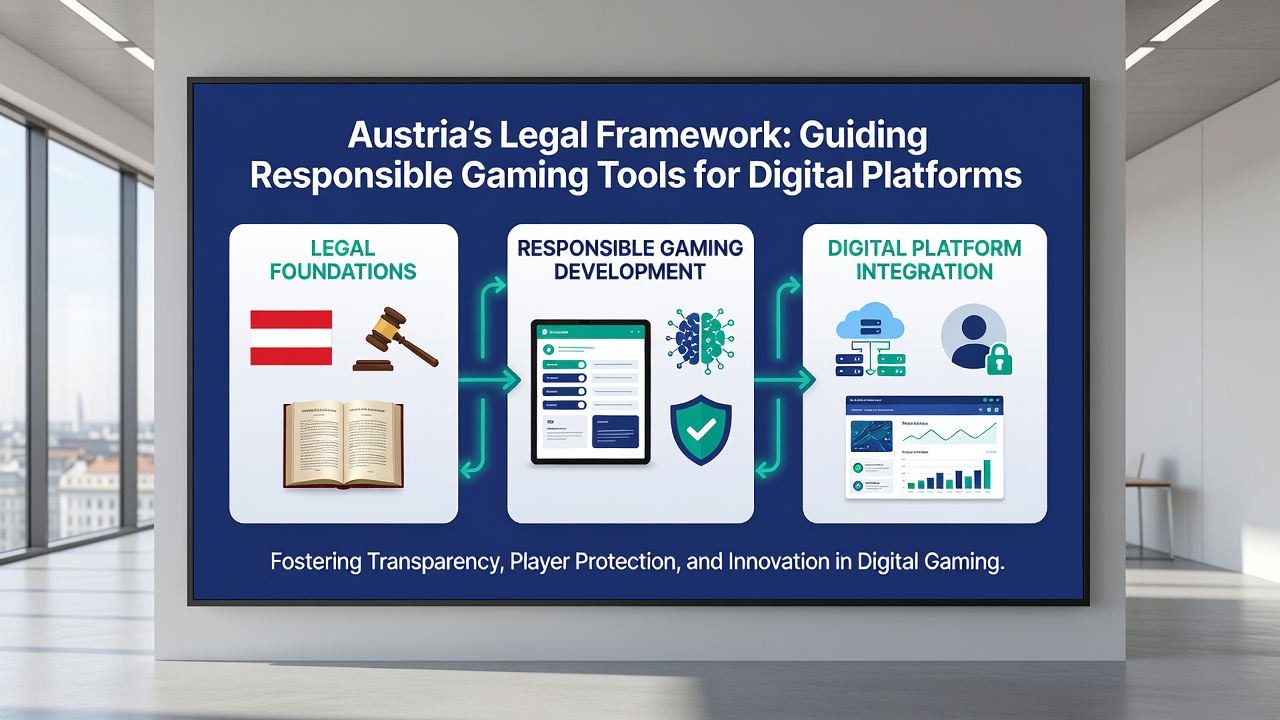
Austria maintains a structured approach to gambling regulation through its core legislation and supplementary rules that shape how operators develop tools for player safety on digital platforms, and this system continues to evolve with technological advances. The primary statute, the Glücksspielgesetz, establishes requirements for licensed providers to implement measures that help users manage their activity, while the Federal Ministry of Finance oversees compliance and issues detailed guidance on technical standards.
Legal provisions require operators to integrate features such as deposit limits, session time tracking, and self-exclusion mechanisms directly into their platforms, and these mandates apply uniformly to both land-based and online offerings. Data collected by regulatory bodies shows that platforms must verify player identity before allowing access to certain tools, which creates a foundation for accurate record-keeping and targeted interventions when patterns indicate risk.
Core Legal Provisions Shaping Tool Design
The Austrian framework specifies that responsible gaming instruments must be accessible without additional cost and must not interfere with the core gameplay experience, yet they must remain prominent enough for users to locate easily. Operators receive technical specifications that outline data formats for limit-setting interfaces, and these rules ensure compatibility across different software providers while maintaining consistent user experience standards throughout the market.
Amendments introduced in recent years expanded the scope to include mandatory reality checks that interrupt play at regular intervals, and these checks must display current spending and time data in clear language. Platforms must also offer the option to set personal loss thresholds that cannot be overridden during an active session, which prevents impulsive changes once a player has already engaged with the game.
Implementation Requirements for Digital Operators
License holders must submit detailed documentation describing how each responsible gaming tool functions before receiving approval to launch new features, and the ministry reviews these submissions against established benchmarks for effectiveness. Testing protocols require simulated user scenarios that demonstrate the tool's ability to enforce limits even under high-volume conditions, while audit trails capture every interaction for later review by inspectors.
Integration with the national self-exclusion register forms another key obligation, and platforms must cross-reference user accounts against this database in real time to block access for those who have opted out. This connection relies on secure data exchange protocols that protect personal information while still enabling immediate enforcement across all licensed sites operating within Austria.
Monitoring, Reporting, and Continuous Updates
Operators submit quarterly reports that detail usage statistics for each protection tool, and regulators analyze these figures to identify trends that may require adjustments to the legal guidelines. When data reveals low adoption rates for particular features, the ministry can issue updated circulars that refine presentation standards or introduce new notification requirements for players nearing their chosen thresholds.
As of August 2026, recent circulars have emphasized mobile-specific adaptations, requiring that all limit-setting functions remain fully functional on smaller screens without requiring users to switch to desktop versions. This focus stems from usage patterns showing increased participation through smartphones, and it drives developers to redesign interfaces so that core controls stay within thumb reach during typical play sessions.
Collaboration With Technology Providers and Research Bodies
The regulatory environment encourages partnerships between licensed operators and specialized software companies that specialize in behavioral analytics, and these collaborations help create tools that adapt based on individual playing histories rather than applying one-size-fits-all rules. Research institutions contribute by supplying anonymized datasets that inform the development of predictive models used to flag accounts showing early signs of problematic behavior.
One study conducted by a European academic consortium examined how different notification styles affect user response rates, and its findings influenced the ministry's recommendations on message wording and timing. Operators now incorporate these evidence-based approaches when designing pop-up alerts and email reminders that encourage players to review their activity summaries.
Conclusion
Austria's legal structure creates clear pathways for the creation and refinement of responsible gaming tools on digital platforms, and ongoing regulatory updates ensure these instruments keep pace with changes in technology and player behavior. Through mandatory technical standards, reporting obligations, and integration with national databases, the framework maintains consistent application across the licensed market while leaving room for innovation within defined boundaries.